
Sudochye Lake
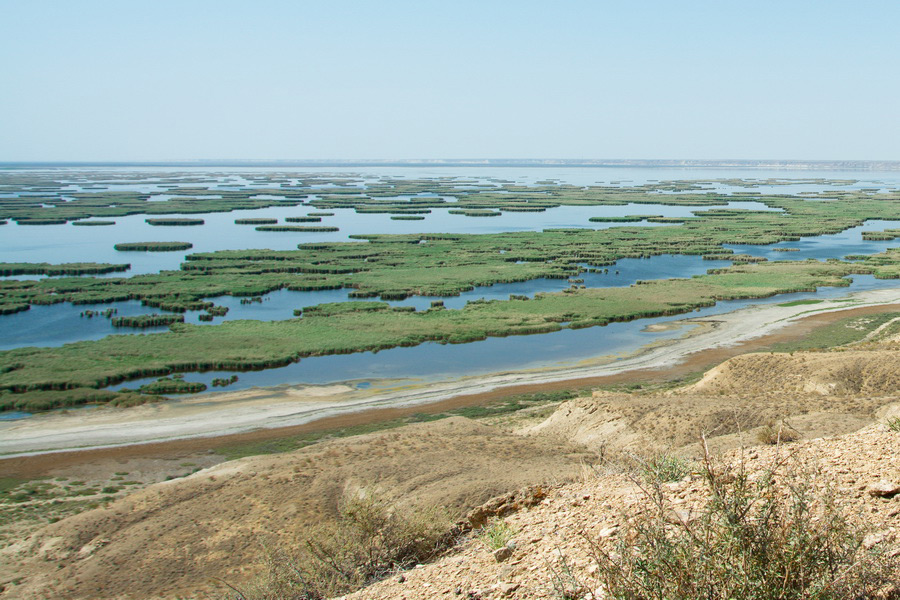
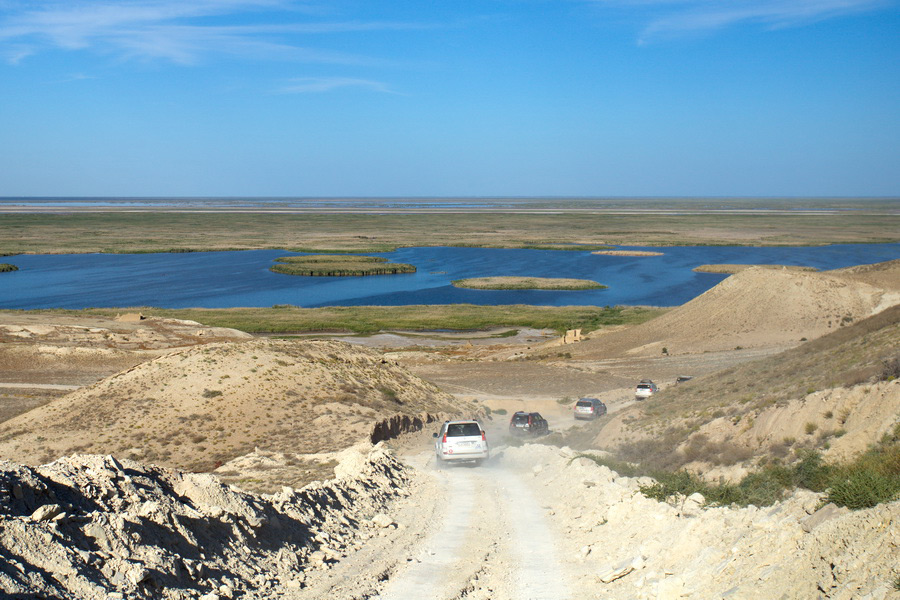
In the distant past, Lake Sudochye was the largest body of water in the delta of the Amu Darya River and was connected by a channel to the Aral Sea. But over the past 60 years, like the Aral Sea, it has lost volume and split into a group of small lakes. At the same time, Sudochie has partially managed to preserve its ecosystem, fish are still found here and migratory birds stop at the parking lot, as well as pink flamingos nest.
Sudochye Lake is shallow – its depth does not exceed 3 meters, and the average depth is 1.5 meters. Initially, it occupied an area of 350 square kilometers, which has now decreased to 330, and this figure changes periodically due to fluctuations in water levels. Today, Sudochye Lake is divided into a system of 4 lakes: Akushpa, Begdulla-Aydin, Karateren and Bolshoe Sudochye. In summer, the water temperature is 25-27 degrees Celsius, and in winter the lake is covered with ice.
The history of Sudochie Lake is modest and important milestones are known only in the last 100 years. The name Sudochye is translated from the Karakalpak language as "fresh water". The first settlements in the vicinity of the lake appeared in the 9th century. The first mapping in 1849 was carried out by researcher A. Butakov during an expedition to the Aral Sea. And already at the end of the 19th century, the settlement of Urga appeared, right under the cape of the same name. The ruins of a medieval lighthouse can be seen on the cape today.
When the water level in the Aral Sea began to fall in the 1960s, the water gradually drained from Lake Sudochye - in 1972, its area decreased by 4 times. But later, thanks to the redirection of drainage waters from the Amu Darya, Sudochye was restored. In 1991, the Sudochye ornithological reserve was established here. In 2008, the lake received the status of the most important ornithological territory, and in 2023 it was included in the list of the Ramsar Convention, which protects wetlands around the world.
The Sudochie State Ornithological Reserve occupies 50,000 hectares and is designed to preserve the biological diversity of the Sudochie lake system. It is home to 25 species of animals and more than 230 species of birds, of which 15 species are endangered, and 20 species are listed in the Red Book of Uzbekistan. Pink flamingos, herons, pelicans, swans, golden eagles, ducks and other bird species are found on Sudochie Lake. In 2014, during a scientific expedition, a huge population of pink flamingos was discovered – 7000 birds nested on the lake!
There are several species of fish in the waters of Lake Sudochye – carp, crucian carp, carp carp, walleye and others. In the past, 2,000 tons of fish were harvested here, but now there is no industrial production, and only locals come here. In the past, there was a fishing village on the west coast of Urga, where mostly Russian immigrants lived.
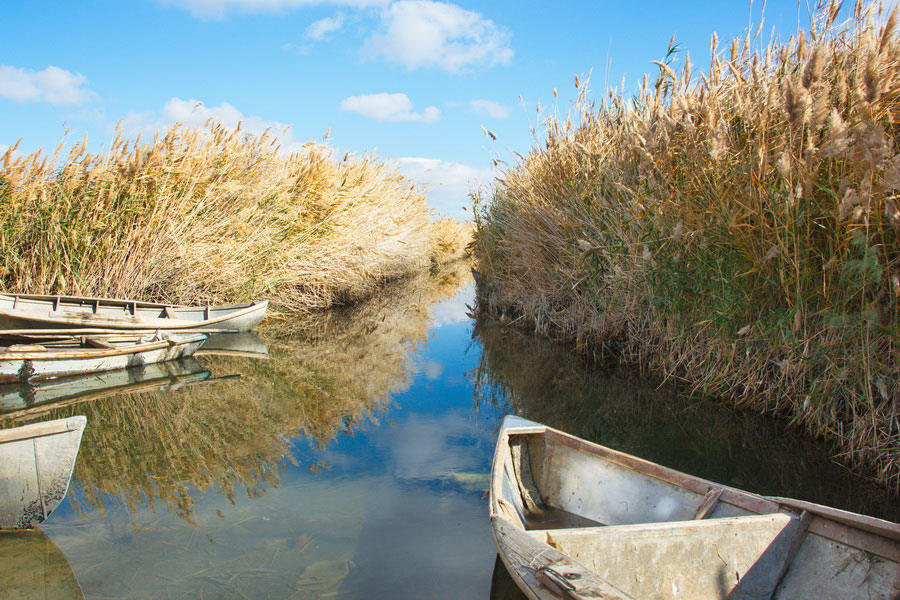
The village of Urga is located on the western shore of the cape of the same name, directly under the Chinka wall of the Ustyurt plateau. It has existed for almost 100 years, and the last resident left his home in 1971. Today, there is a small Russian cemetery, several foundations, the ruins of a fish storage facility that was filled with tons of ice, and the walls of a small fish processing plant. Sometimes fishermen come here, and they go deep into the lake on old boats along the narrow channel. A visit to Sudochye Lake and Urga village is included in many programs of tours to the Aral Sea.
Thanks to the efforts of international nature organizations and the authorities of Karakalpakstan, Lake Sudochye did not turn into a desert like the Aral Sea. Today Sudochie is a real oasis in the desert.