
Sitorai Mokhi Khosa Palace
In the middle of the 19th century, the Emir of Bukhara, Nasrullahan, decided to build himself a new country residence. But before the construction of the palace began, there was a question of how to choose the coolest place so as not to suffer from the heat in the summer. And the architects resorted to an ancient method – butchered sheep carcasses were brought to possible construction sites. The place where the meat went bad last was chosen for the construction of Bukhara's suburban pearl. However, the first palace has not survived to this day.
A few decades later, another emir of Bukhara, Mir Sayyid Alimkhan, began construction of a new palace here. According to legend, the emir dedicated the palace to his wife Sitora. The work lasted for several years and the residence turned out to be incredibly beautiful. Bukhara architects who studied in Russia have managed to combine eastern and Western styles in their creation. Unfortunately, the emir's wife died some time later, but her name gave the palace its name. It was named Sitorai Mokhi-Khosa, which means "A star like the Moon" in Tajik, and this name has been preserved to this day. But this palace also suffered the fate of the first one, it was destroyed.
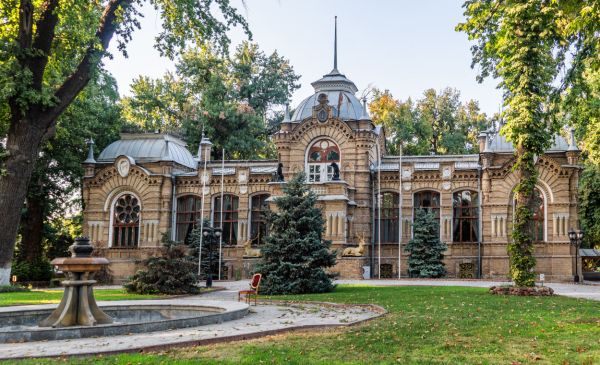
The Sitorai Mokhi Khosa Palace, which has survived to this day, was built in 1912-1918 by order of the last emir of Bukhara, Mir Sayyid Alimkhan. The best Bukhara craftsmen of that time, as well as two Russian engineers Margulis and Sakovich, took part in the construction.
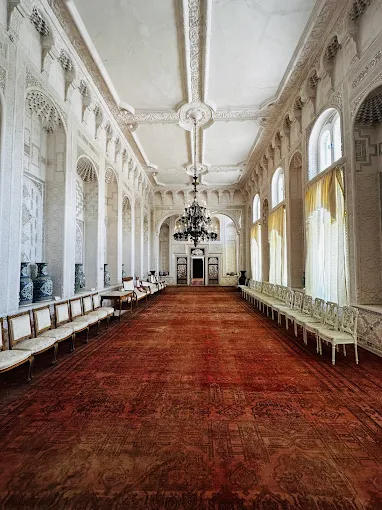
The main building of the palace includes several halls for receiving guests, as well as the personal rooms of the emir. A special place here is occupied by the White Hall, which was created under the guidance of the famous master Usto Shirin Muradov, who later erected a monument on the territory of the summer residence. The white hall is decorated with ganch, which was placed on the walls covered with mirrors. At the same time, not a single pattern is ever repeated. It is worth noting that there are a lot of mirrors in Sitorai Mokhi Khosa. Here you can see Venetian mirrors, Japanese mirrors enclosed in unusual frames, and even a trellis that creates a reflection that repeats 40 times.
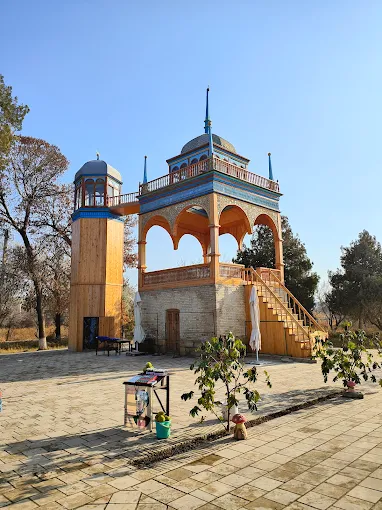
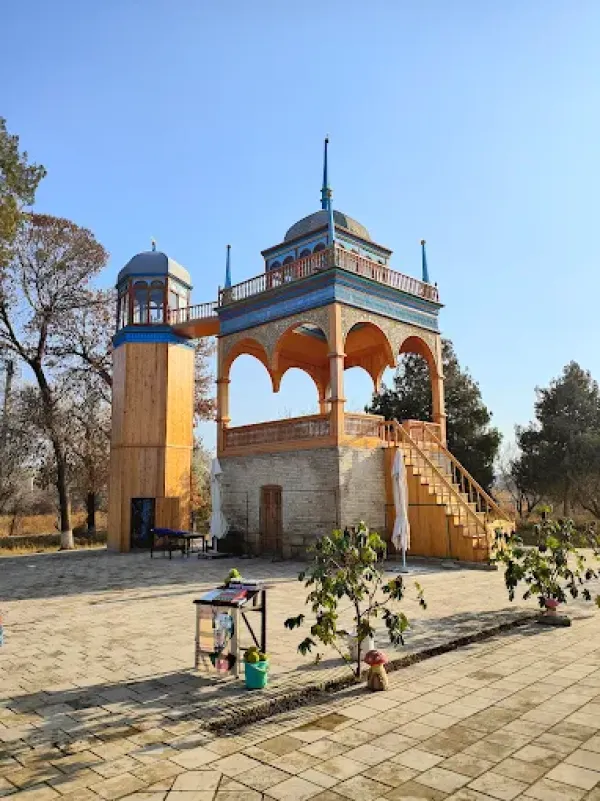
In addition, the palace houses a summer tea room, a small minaret, and a guest house richly inlaid with gold leaf. And each place has its own stories and legends that you can talk about for hours.
Shortly after the fall of the Emirate of Bukhara, in 1927, the palace was turned into a museum. Its exposition was periodically changed. But today the Museum of Decorative and Applied Arts is located here. The exhibition includes palace furniture of the 19th-20th centuries, jewelry and gold-woven products of Bukhara craftsmen, art objects from Russia and Japanese porcelain of the 14th-20th centuries.
Bukhara has grown significantly over the past century, and today the Sitorai Mokhi Khosa Palace is located just 4 kilometers from the outskirts of the city. The residence of the last emir of Bukhara, which today, like a hundred years ago, is strutted by peacocks, appears to visitors in reflections of its former splendor, as if it were still ready to receive royals and overseas ambassadors.


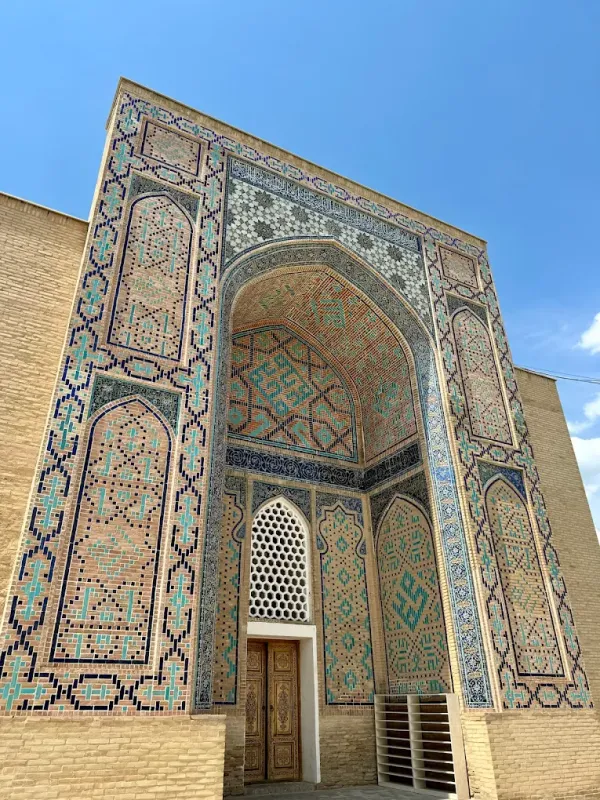


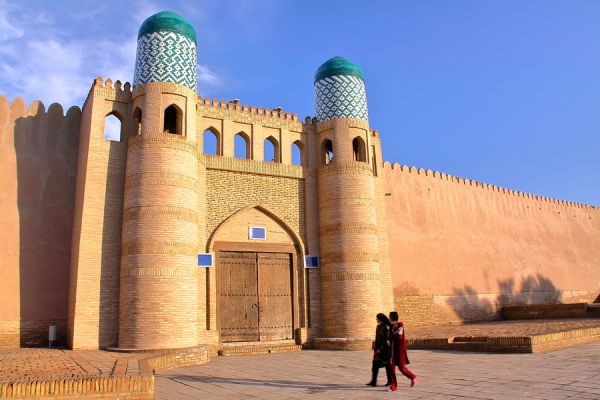
Place on the map
Tours where you can visit this place:
Sitorai Mokhi Khosa Palace
Tashkent — Bukhara — Samarkand — Shakhrisabz
- 720$
- 7d.
Sitorai Mokhi Khosa Palace
Tashkent — Bukhara — Samarkand
- 640$
- 7d.
Sitorai Mokhi Khosa Palace
Tashkent — Bukhara — Samarkand — Khiva — Khorezm
- 730$
- 7d.
Sitorai Mokhi Khosa Palace
Tashkent — Bukhara — Samarkand
- 500$
- 5d.

Sitorai Mokhi Khosa Palace
Bukhara — Samarkand — Shakhrisabz
- 480$
- 5d.

Sitorai Mokhi Khosa Palace
Bukhara — Samarkand — Khiva
- 440$
- 5d.

Sitorai Mokhi Khosa Palace
Tashkent — Bukhara — Samarkand — Khiva
- 590$
- 6d.
Sitorai Mokhi Khosa Palace
Tashkent — Bukhara — Samarkand — Shakhrisabz
- 1150$
- 7d.