Rukhabad Mausoleum
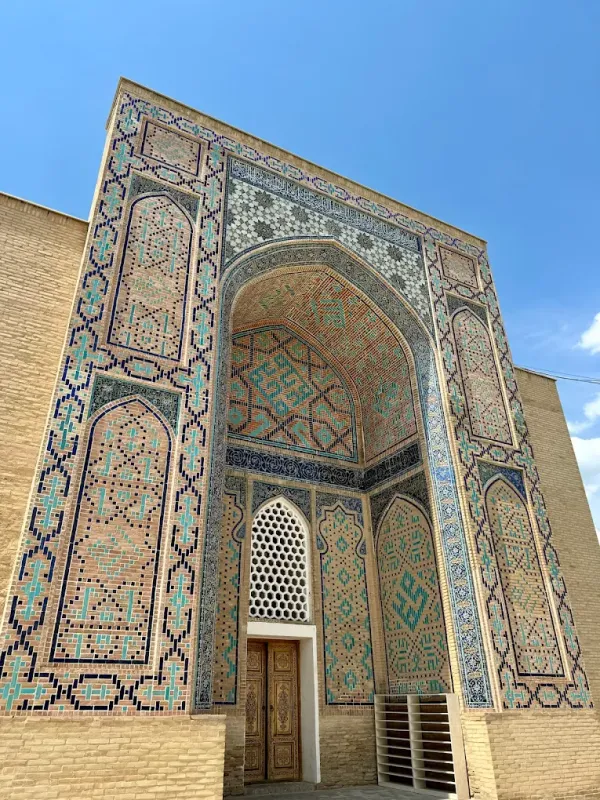
The Rukhabad Mausoleum was built in 1380 by order of Amir Timur over the grave of the Islamic theologian and mystic Sheikh Burhaneddin Sagaraja, who was especially revered by Timur's contemporaries.
Burhaneddin Sagaraji made a significant contribution to the spread of Islam among the nomads of East Turkestan. The Islamic theologian enjoyed great influence at the court of the Chinese Yuan Dynasty and was married to a Chinese princess. The exact date of his death has not been established, but it is known that he died in China. After his death, according to Sagaraja's will, his ashes were transported by his son Abu Said to Samarkand.
Surrounded by a halo of sanctity, the name of the sheikh was the reason for the name of the mausoleum - Rukhabad - "The Abode of the Spirit." This single-domed structure, atypical for that time, without an entrance portal, was built of burnt brick and looks very modest against the background of Gur-Emir and Ak-sarai, located next door.
An arched octagon with windows on the main axes is based on a cube-shaped base, and a spheroconic dome crowns the structure. According to legend, a box with seven hairs from the beard of the Prophet Muhammad, which belonged to the holy sheikh, is walled up in the dome.
The mausoleum has three entrances from the north, west and south. The interior decor of the mausoleum is also very modest: almost its only decoration is a two-meter ceramic panel at the base of the walls with inserts of glazed bricks in the form of a narrow ribbon. There are simple tombstones of Sagarji, his princess wife and 9 children.




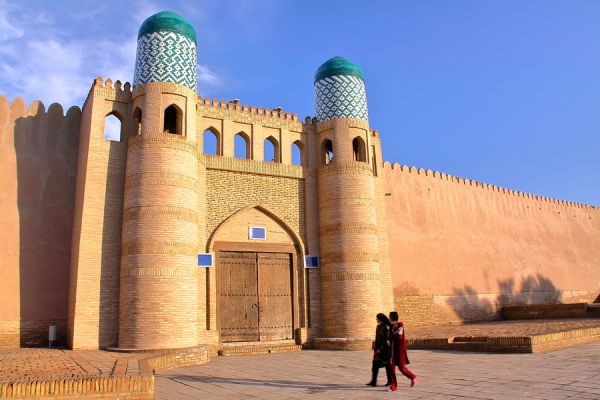
Place on the map
Tours where you can visit this place:
Rukhabad Mausoleum
Tashkent — Bukhara — Samarkand — Shakhrisabz
- 720$
- 7d.
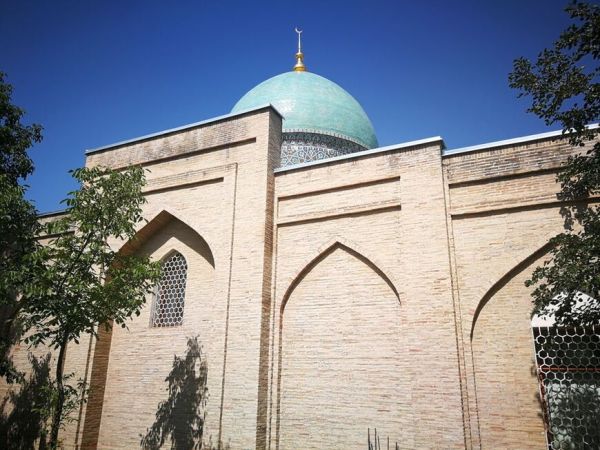
Rukhabad Mausoleum
Tashkent — Bukhara — Samarkand
- 640$
- 7d.
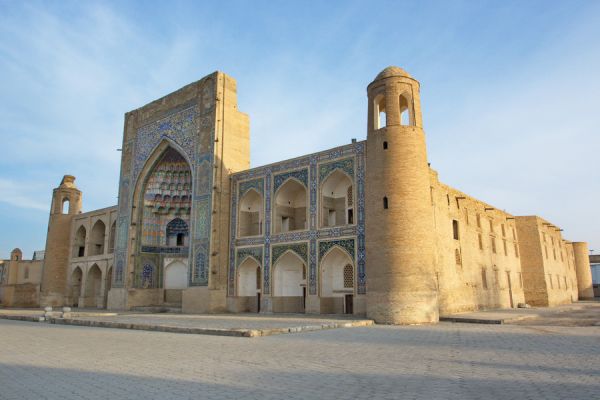
Rukhabad Mausoleum
Tashkent — Bukhara — Samarkand — Khiva — Khorezm
- 730$
- 7d.
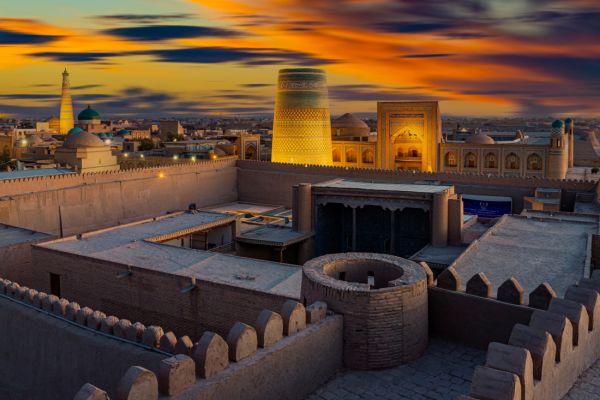
Rukhabad Mausoleum
Tashkent — Bukhara — Samarkand
- 500$
- 5d.

Rukhabad Mausoleum
Bukhara — Samarkand — Shakhrisabz
- 480$
- 5d.

Rukhabad Mausoleum
Bukhara — Samarkand — Khiva
- 440$
- 5d.

Rukhabad Mausoleum
Tashkent — Bukhara — Samarkand — Khiva
- 590$
- 6d.
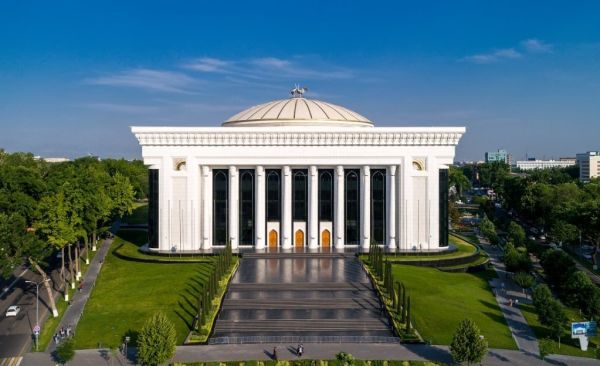
Rukhabad Mausoleum
Tashkent — Bukhara — Samarkand — Shakhrisabz
- 1150$
- 7d.