
Registan Square
I am Registan, I am the heart of Samarkand,
I am a monument to past wars and troubles.
Descendant, listen to the wisdom of the covenant: Take care of the world.
To live in peace and friendship is happiness.
Remember that everywhere, man.
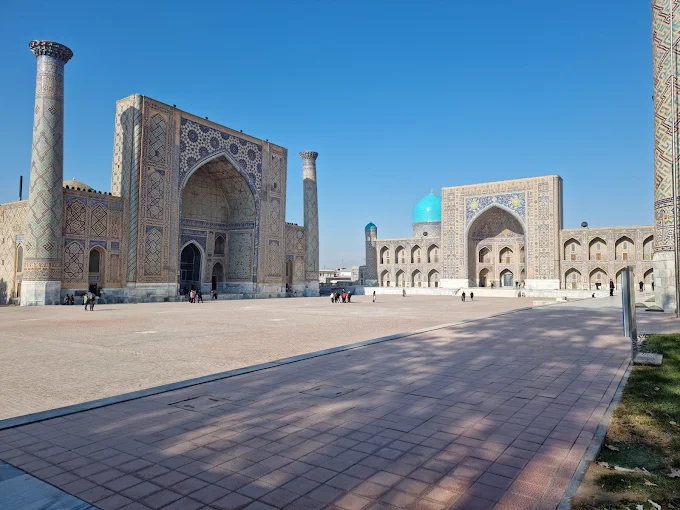
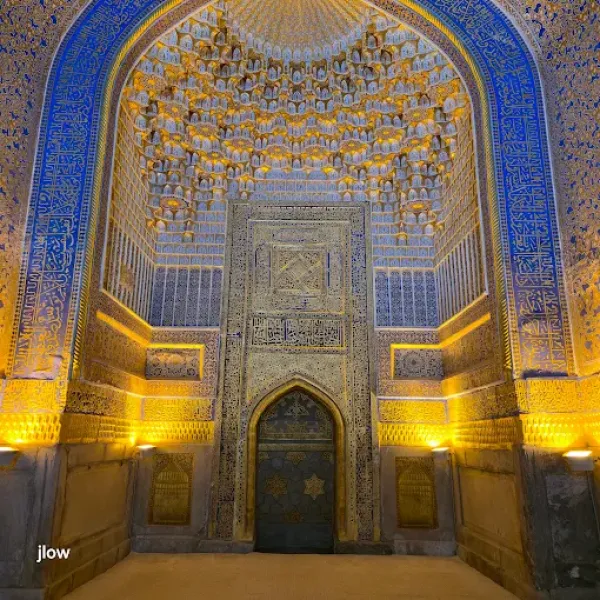
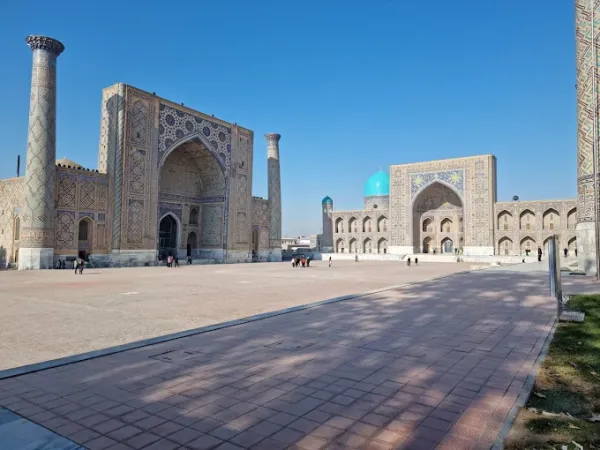
Registan Square is one of the most beautiful squares in the world, it is called the pearl of Central Asia. The square gained this fame due to the unique monuments of medieval oriental architecture surrounding it from three sides in the form of a beautiful architectural ensemble: Ulugbek Madrasah (1417-1420), Sher-Dor madrasah (1619-1636) and Tillya-Kari madrasah (1646-1647). This ensemble is considered the greatest among the buildings of the Islamic world.
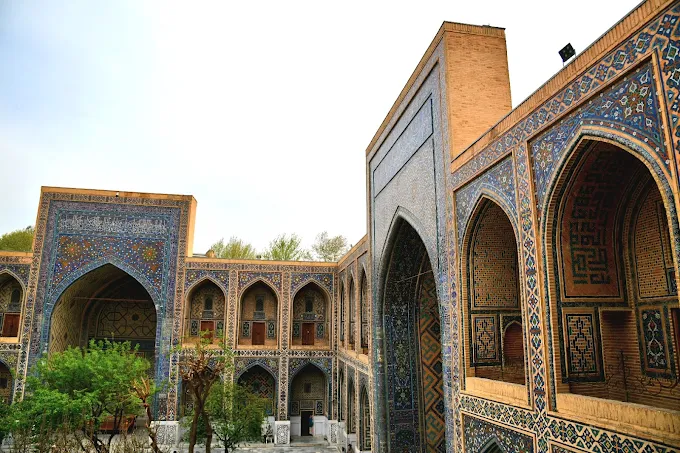
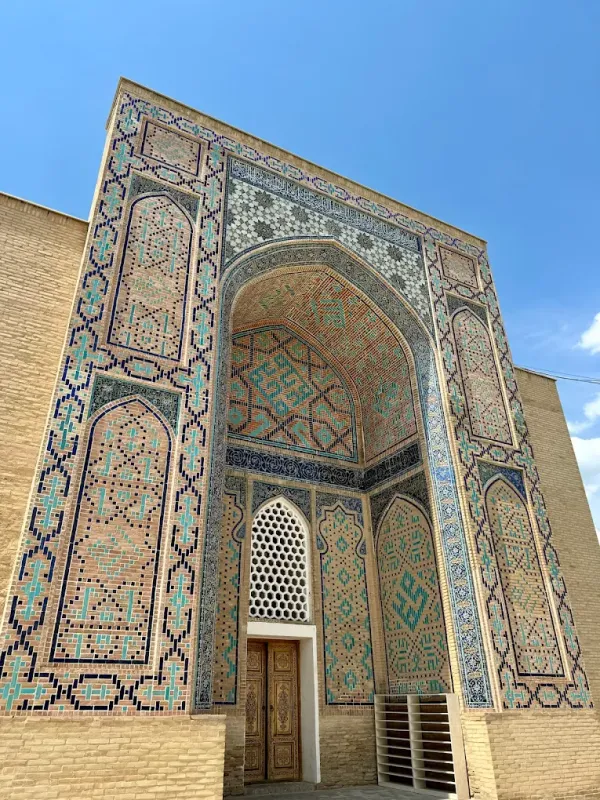
All three madrassas (in the old days, religious educational institutions were called that in the east) face their portals to the center of the square and create a harmonious ensemble composition. Moreover, each building is distinguished by its unique decor - a pattern of filigree stone carvings decorating the walls and portals. The blue domes above the madrasah are made of baked bricks, and the exterior is lined with glazed tiles that shine in the sun, no matter which side it shines from.
According to legend, the name of the Registan monument came from the fact that the area of the square was covered with sand ("reg" - sand and "stan" - a place, i.e. Registan - a sandy place) in order to absorb the blood of victims of public executions, which allegedly took place here almost until the beginning of the twentieth century.
Registan began to take shape in the 14th-early 15th centuries as the main urban shopping area and trade and craft center of medieval Samarkand. It was Ulugbek (1394-1449), the grandson of Amir Timur, who began the construction of monumental structures on Registan Square.
During his reign, the first building of the complex was built on Registan - the Ulugbek madrasah (1417-1420). Ulugbek madrasah is a closed rectangular courtyard, the back side of which was occupied by a mosque. There were 4 minarets at the corners of the ensemble. Around the courtyard there were two tiers of arches open to the outside, behind which fifty hujr cells (rooms) were located, and in which over a hundred students studying at the madrasa lived. In this madrasa, many prominent scientists of the XV century gave lectures on astronomy, theology, mathematics and other subjects: Mirzo Ulugbek himself, Kazi-zadeh ar-Rumi, Jamshid Giyas al-Din Al-Kashi, Al-Kushchi and others.
After Ulugbek's death, Emir Yalangtush continued construction on Registan. During his reign (the first half of the 17th century), two more monumental buildings were built on Registan - the Sher-Dor and Tillya-Kori madrasahs. These buildings are distinguished by their impressive size and luxury of decoration, but their artistic and architectural advantages are still inferior to their prototype, the Ulugbek madrasah. The Sher-Dor Madrasah, the "abode of lions," was built two centuries after the Ulugbek madrasah appeared on the square. It was built on the place where the khanaka, a monastery for Sufis, was located under Ulugbek. The building was under construction for almost 17 years (1619-1636). Its author was the architect Abdul Jabbar. The Sher-Dor madrasah almost mirrored the first building of the ensemble, the Ulugbek madrasah, but in distorted proportions. All the walls of the Sher-Dor Madrasah are covered with quotations from the Koran. A swastika is placed in the center of the arch of the entrance portal. The exterior and courtyard facades are decorated with great imagination. Glazed brick cladding, mosaic sets and paintings with an abundance of gilding are used in the architectural decoration. The mosaic panels of the courtyard arches feature a lot of climbing flowers and buds forming a complex openwork ornamental pattern. In contrast to the exterior design, the interior of the khujr cells (rooms) is strict and ascetic.
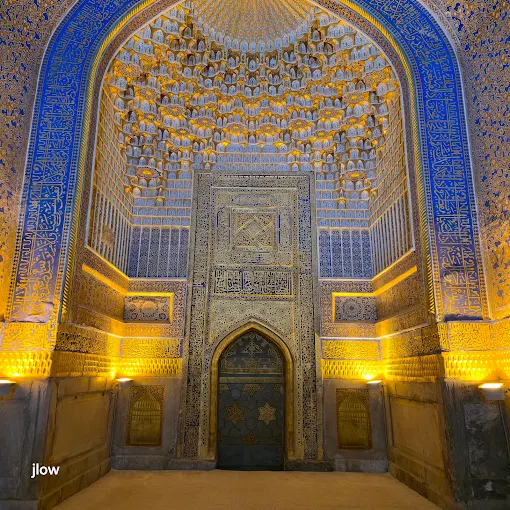
Ten years later, in 1646, construction of the Tillya-Kori madrasah began on the site of the former caravanserai, construction lasted for fourteen years and ended in 1660. This building closes Registan Square from the north, thus forming a complete architectural ensemble facing south. Tillya-Kori Madrasah, in addition to its main task of educating students, served as a cathedral mosque. The surfaces of the walls and the vault of the mosque are completely covered with "kundal" paintings with abundant gilding. The mihrab, the direction to Mecca, and the eleven-step minbar (elevation for the preacher - imam) were gilded. The abundance of gold in the decoration determined the name Tillya-Kori (decorated with gold). Thus, in the 17th century, Registan acquired its majestic appearance, in which it mostly appears before our eyes today. In 2001, this Registan ensemble, along with other ancient buildings of Samarkand, was included in the UNESCO World Heritage List.




Place on the map
Tours where you can visit this place:
Registan Square
Tashkent — Bukhara — Samarkand — Shakhrisabz
- 720$
- 7d.
Registan Square
Tashkent — Bukhara — Samarkand
- 640$
- 7d.
Registan Square
Tashkent — Bukhara — Samarkand — Khiva — Khorezm
- 730$
- 7d.
Registan Square
Tashkent — Bukhara — Samarkand
- 500$
- 5d.

Registan Square
Bukhara — Samarkand — Shakhrisabz
- 480$
- 5d.

Registan Square
Bukhara — Samarkand — Khiva
- 440$
- 5d.

Registan Square
Tashkent — Bukhara — Samarkand — Khiva
- 590$
- 6d.
Registan Square
Tashkent — Bukhara — Samarkand — Shakhrisabz
- 1150$
- 7d.