

Luby House
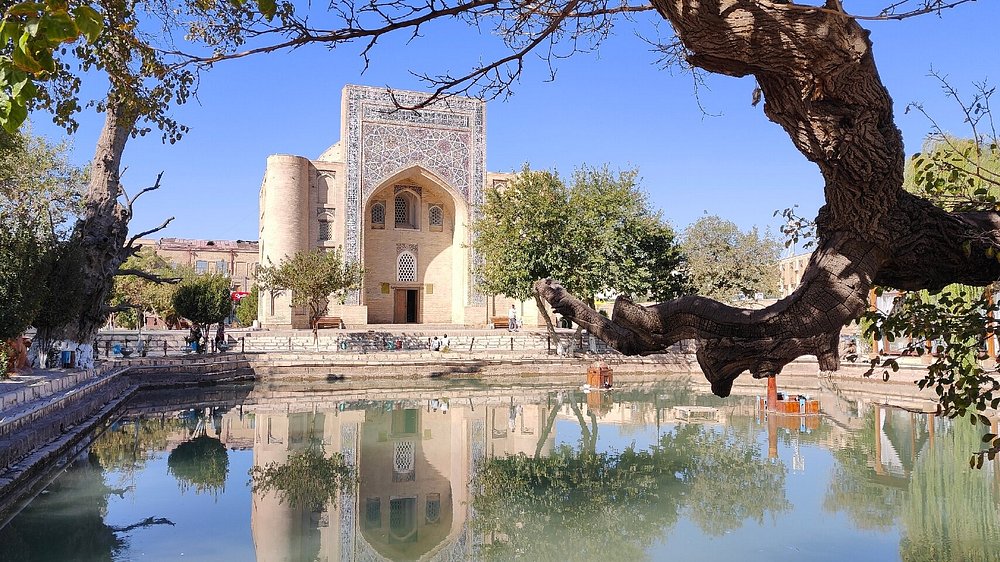
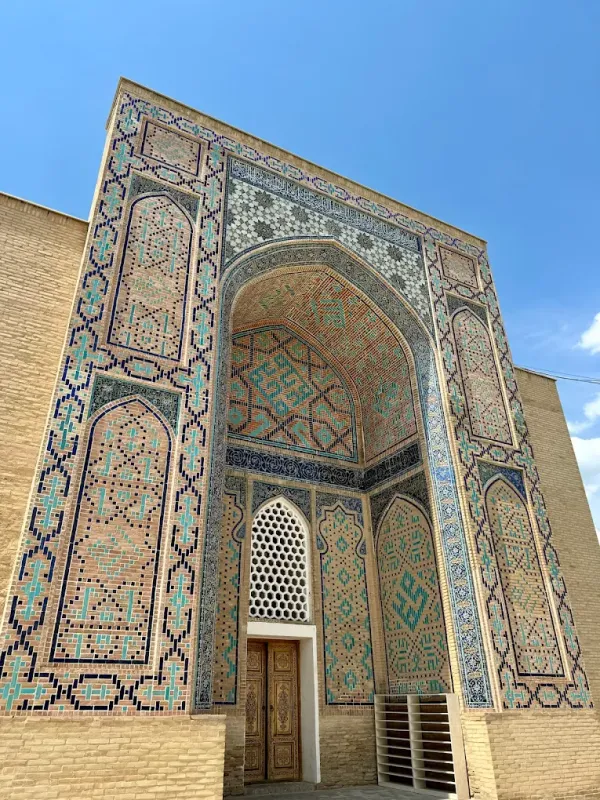
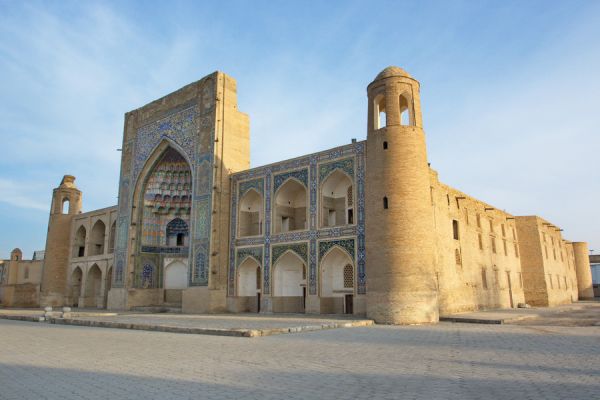
Lyabi House is one of the most famous and popular attractions of the city. Here, magnificent architectural masterpieces are collected on the same territory — Nadir Divan Begi madrasah and khanaka, built in 1622, and Kukeldash madrasah, built in 1568. These beautiful buildings rise along the coast of an artificial reservoir of impressive size (42 by 36 meters). The depth of this reservoir is 5 meters.
Literally translated, the name of the ensemble means "the shore of the pool." It is from here that the city's population in the past centuries received fresh water extracted by local water carriers. During the Soviet Union, many reservoirs in Bukhara were actively drained due to the danger of spreading all kinds of infections, but the Labi House pond miraculously remained untouched.
The founder of the pond is considered to be Vizier Nadir Divan-Begi. It was on his orders that a large reservoir was dug in the area between two madrasahs and a khanaka. The vizier took care of the architectural appearance of the city, and the pond became the final point in the formation of the majestic Bukhara landscape. Some historians talk in detail about the origin of the pond.
It is said that once upon a time there was a house of an old widowed Jewish woman on the site of today's reservoir. When the vizier chose this territory, he came to the old woman and offered her to buy her farmstead for a lot of money. But the woman did not agree to sell her home. Divan Begi took her to the emir, hoping that the ruler would resolve their dispute in favor of the vizier and force the Jewess to agree to the sale. But Emir Imam Kuli Khan acted very wisely: he did not make a single decision, but instructed the board of muftis to consider the case. Of course, the muftis forbade the vizier to take away a woman's only home if she did not voluntarily want to leave it, because they believed that Jews and Muslims should have the same rights. But Nadir Divan-Begi did not give up. He decided to dig a ditch right along the Jewish woman's estate. As a result, the cunning nobleman got his way: the water from the irrigation ditch gradually destroyed the walls of the old building, and the woman finally gave up. But as payment for the house, she asked for another plot to be allocated to her for the construction of a synagogue on it. The vizier, without hesitation, gave the old woman part of his own territory. The first Jewish church in the city was built on it, and a whole block was soon formed around the synagogue, which today is called "Jewish". In general, everyone was satisfied: the Jew got what she wanted, and the Sofa-Runner dug the desired pond. By the way, another unofficial name of this reservoir has come down to our days — Hauz-i Bazur, which literally means "built with coercion" in Russian.
In the Middle Ages, the Lyabi House played the role of a market square. Major trade deals were concluded here. It was quite convenient to trade here only because the urban area is very densely built up, and Labi House is one of the few places in Bukhara that has a sufficient amount of free space.




Place on the map
Tours where you can visit this place:
Luby House
Tashkent — Bukhara — Samarkand — Shakhrisabz
- 720$
- 7d.
Luby House
Tashkent — Bukhara — Samarkand
- 640$
- 7d.
Luby House
Tashkent — Bukhara — Samarkand — Khiva — Khorezm
- 730$
- 7d.
Luby House
Tashkent — Bukhara — Samarkand
- 500$
- 5d.

Luby House
Bukhara — Samarkand — Shakhrisabz
- 480$
- 5d.

Luby House
Bukhara — Samarkand — Khiva
- 440$
- 5d.

Luby House
Tashkent — Bukhara — Samarkand — Khiva
- 590$
- 6d.

Luby House
Tashkent — Bukhara — Samarkand — Shakhrisabz
- 1150$
- 7d.