
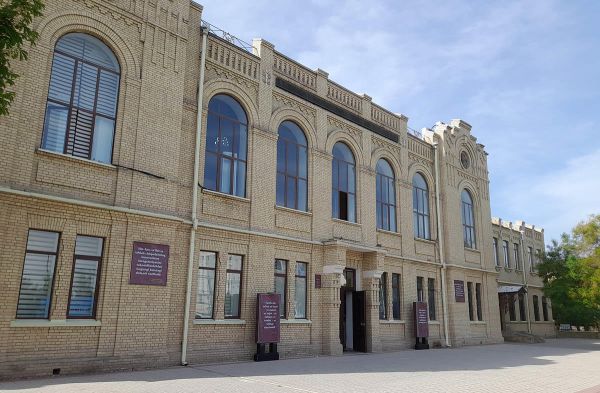
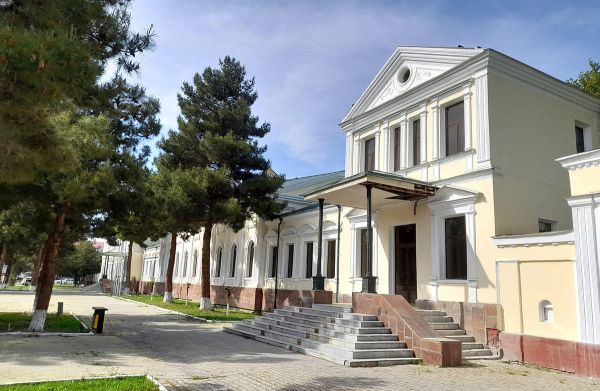
Former Governor's House
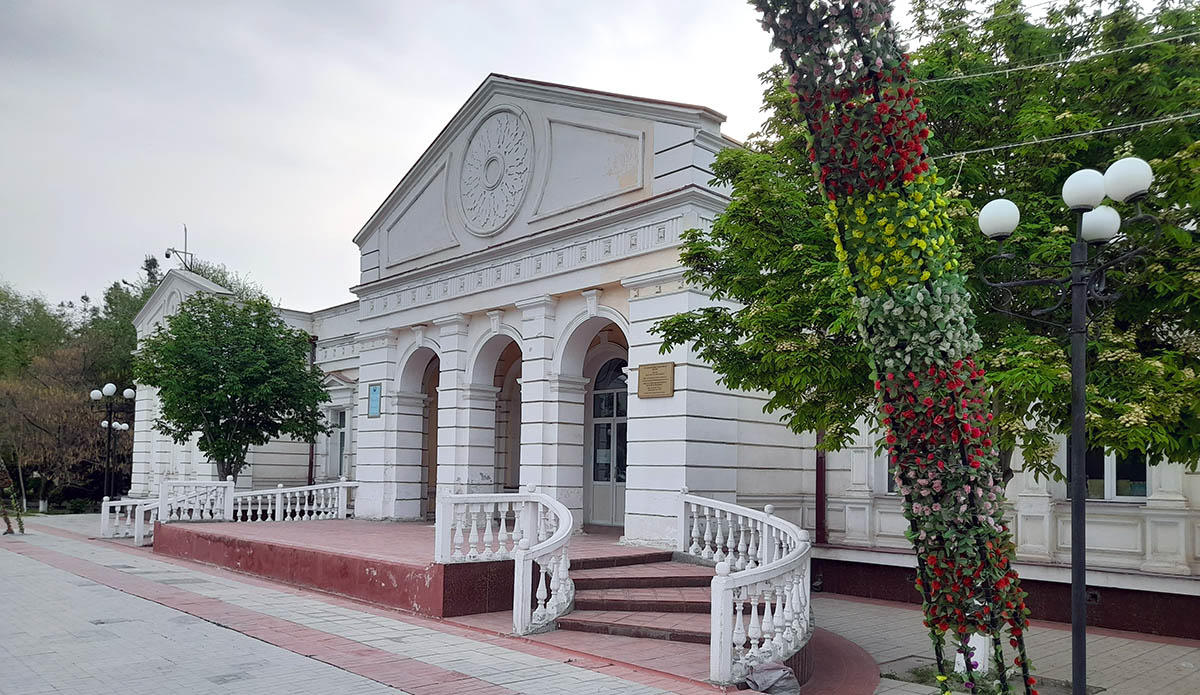
In the era when Ferghana was called New Margelan, the building of the military governor was on the list of the most notable urban buildings. Now, as then, this place is considered the center of the city. The building is surrounded by a metal fence, stands slightly away from the sidewalk. Adjacent to the building is an impressive park with many alleys, beautiful trees, plants and flowers, a pond and an unusual gate at the entrance. Currently, it is a city park called the Central Park, and the former military governor's building has been placed at the disposal of the regional drama theater.
Construction history
The initiator of the construction was M. D. Skobelev, who served as the military governor of the Ferghana region, but ironically he was removed from office before work began. Construction began in 1879, but it was completed only 20 years later — in 1899. If you believe the documentary evidence, then the author of the project is I.A. Lekhanov, an experienced and talented architect of that time. In 1878, he was appointed to the post of regional engineer of the Ferghana region, and until 1897, a new city was built under his strict guidance. However, he was known not only for buildings in Ferghana, he was the author of a number of other significant architectural objects in the capital of Uzbekistan, including the building of the Control Chamber.
Lekhanov was distinguished by the stylistic features of his building, and despite his administrative position in Ferghana, he was directly involved in the planning of future residential and non-residential buildings. Obviously, it is for this reason that a harmonious stylistic unity can be traced in the city among the buildings of that era.
Before the military governor's building was given over to the needs of the Uzbek-Russian theater in the 1930s, it handled most administrative issues. Even though there was a regional administration in Ferghana, which occupied its own separate building. In the 1990s, the theater split, and the Russian troupe moved to the House of culture on the outskirts of Ferghana. While the building of the military governor is still used by the Uzbek Drama Theater.
Architecture of the building
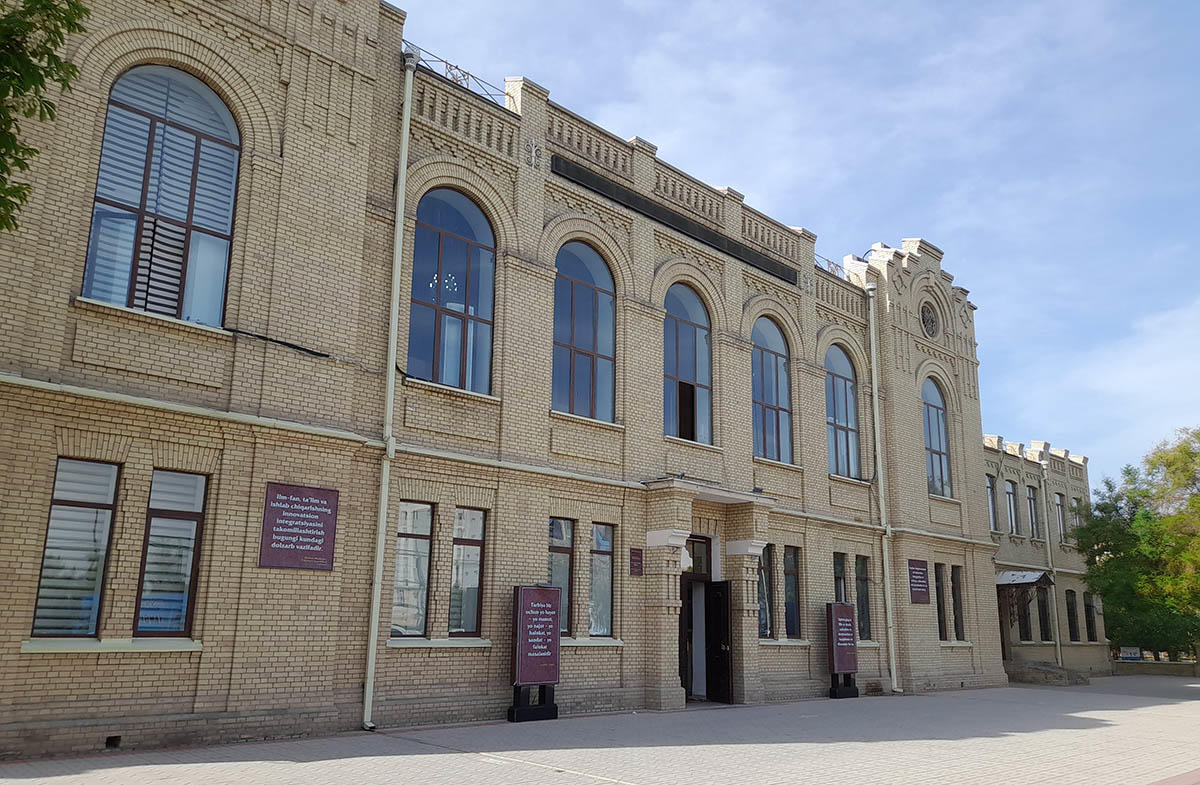
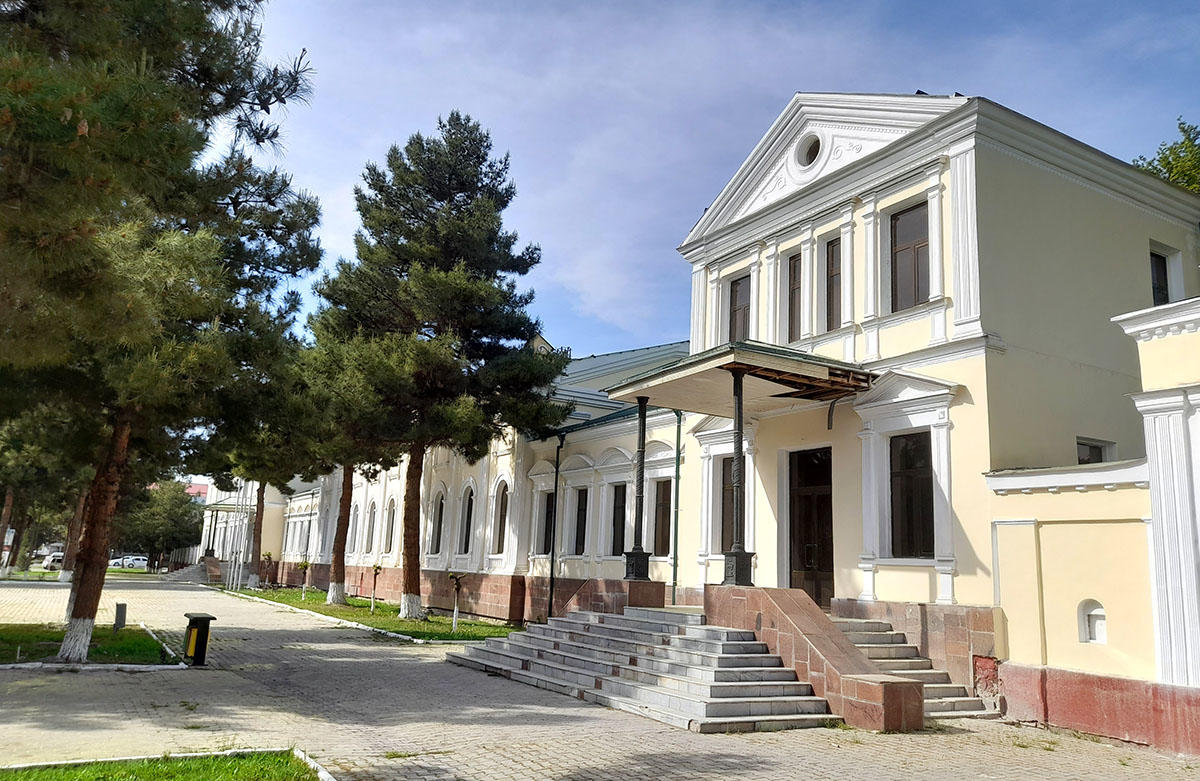
The exterior decoration of the building has been preserved to this day almost the same as when it was completed. The building just changed color. There are two floors: on the ground floor there were work rooms, reception rooms and formal halls, and on the second floor there were living rooms. The building itself has a symmetrical composition and two main entrances on the sides of the main building. The right entrance led to rooms for business or personal meetings. There were offices, a small dining room with a buffet, a living room and several more rooms. And on the left side of the military governor's building were large ceremonial rooms designed for formal receptions and official meetings: an impressive banquet hall with its own dining room and orchestra, a billiard room, a library with many books and a small winter garden. All of this was connected by an elongated showroom. Inside, you can easily move from the left side to the right and back, and those rooms that are located behind the windows of the main facade are connected into one grand suite. It was not for nothing that the military governor's building was built for two decades — at that time, the building was considered the most significant among others of this kind, not only in Ferghana, but throughout Turkestan.
The architecture of the building's facade deserves a special word. It is literally strewn with all sorts of and even slightly incongruous shapes and elements. At the same time, the unity of color solutions and high-quality execution of all facade details give the building elegance, picturesqueness and a certain neatness. The pointed shape of the white arcade, which is repeated by the windows on the second floor, highlights the volume of the building in the central part. Such a technique is not often found in 19th-century architecture, presumably, it was Lekhanov's author's attempt to combine the characteristic features of the Russian style and the features of local architecture in one building.
For our contemporaries, the military governor's building is an example of the so-called "first wave" of Russian architecture in Turkestan, which is very difficult to pass by without stopping.




Place on the map
Tours where you can visit this place:
Former Governor's House
Tashkent — Bukhara — Samarkand — Kokand — Ferghana — Margilan — Chimgan — Rishtan
- 880$
- 8d.

Former Governor's House
Tashkent — Bukhara — Samarkand — Khiva — Ferghana
- 640$
- 7d.
Former Governor's House
Tashkent — Bukhara — Samarkand — Khiva — Kokand — Ferghana — Nukus — Urgench — Khorezm — Chimgan — Rishtan
- 1340$
- 11d.