Bibi Khanum Mosque
"Its dome would be the only
one if the sky were not its repetition,
the only arch would
be if the Milky Way were not its mate."
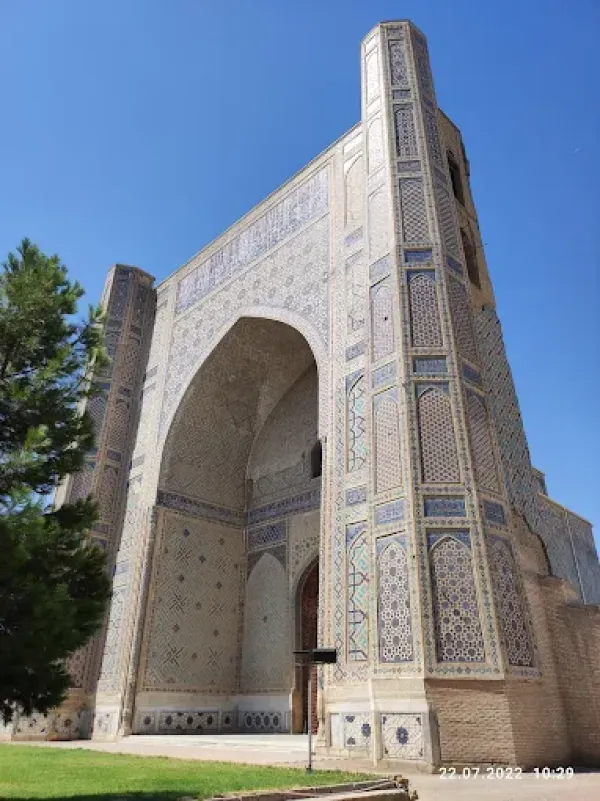
The whole world knows about such an architectural marvel as the Taj Mahal. It was built by Shah Jahan for his beloved wife Mumtaz Mahal in honor of love and eternal memory, having decided to perpetuate her name in this way. Centuries before, the ancestor of the Shah, the Great Tamerlane, grieving for his most beloved wife, built the Bibi Khanim mosque. This is a truly epic building, from which it is impossible to take your eyes off. That's how it attracts. The dome of the mosque, compared in ancient times with the heavens, and the arch of the portal, which was called the Milky Way, are worth a lot.
The Bibi Khanim Mosque (translated as "Eldest Wife", according to one legend, it was built by Timur's eldest wife, Sarai Mulk Khanum) was called the Friday mosque of Samarkand, where thousands of Muslim men came. In fact, the mosque was built in 1399-1404 by order of Amir Temur after returning from an Indian campaign. Construction began in May 1399. The location of the future mosque was chosen by Timur himself. Craftsmen from various countries were involved in the construction.: India, Iran, Khorezm, the Golden Horde. By September 1404, the main part of the complex had already been built. 10,000 people could pray in the courtyard of the mosque at the same time.
On Sunday, the 4th of the month of Ramadan, 801 (1399 our year), skilful engineers and experienced craftsmen laid the foundation of the building at a lucky hour predicted by the stars. Two hundred stonemasons from Azerbaijan, Fars, Hindustan and other countries worked in the mosque itself and 500 people in the mountains worked hard to cut the stone and about a hundred Indian elephants were involved in sending it to the city.”- so wrote the ambassador of the Spanish king Clavijo.
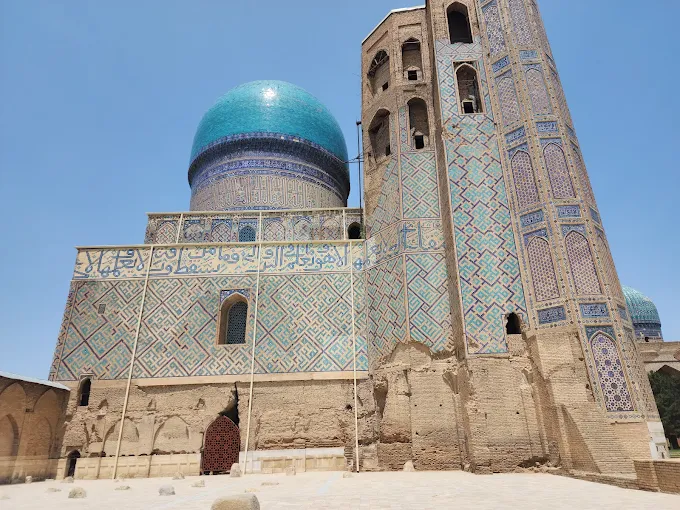
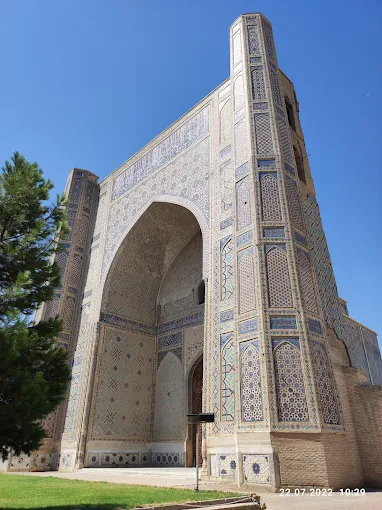
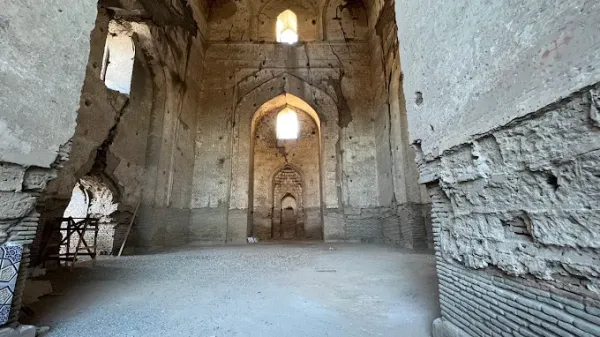
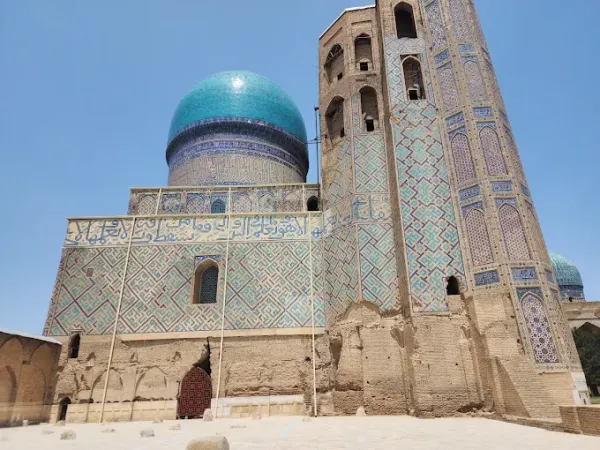
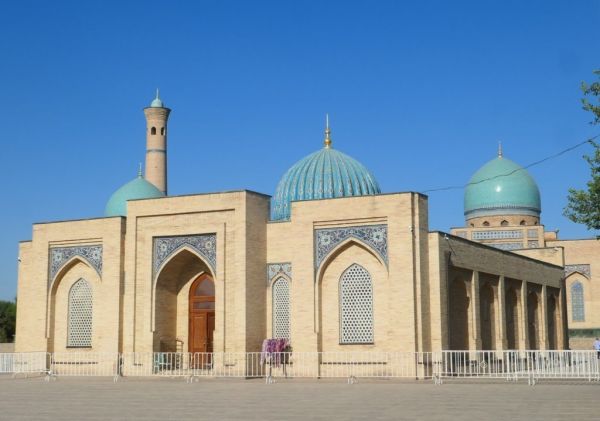
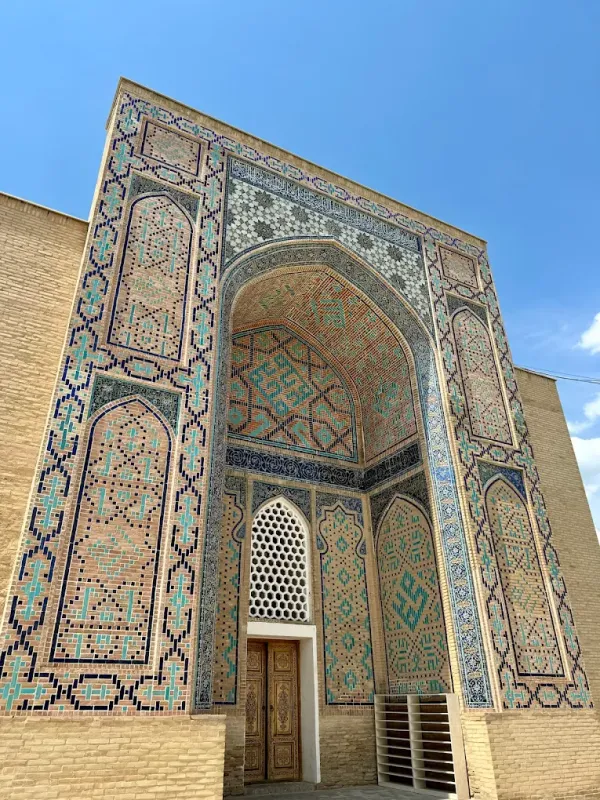
Timur entrusted the supervision of individual construction sites to various princes and emirs, who tried to show their diligence with alacrity. The portal arch, the main mosque building, walls and arcades were built by artels of craftsmen, who were guided by the main builder, who had a three-dimensional model of the structure. This is what the old miniatures tell us. Timur supervised the construction of the mosque for only a few months, but soon he was distracted for years by a new military campaign, this time against the Ottoman Empire. Construction continued without him. When he returned to his capital, he immediately went to see the new mosque. The grandiose buildings occupied a rectangular courtyard measuring 130X102 meters. The main mosque stood on the western side of it, and small mosques stood on the northern and southern sides. The vast courtyard was lined with marble slabs and surrounded by a covered gallery for worshippers. The entrance to the courtyard was decorated in the form of a high portal with two round minarets reaching fifty meters in height. The facade of the cathedral mosque was also decorated with a majestic portal with two minarets. The walls of all the rooms outside were richly decorated with multicolored glazed bricks, forming intricate geometric ornaments and religious sayings. The luxurious and rich interior decoration consisted of majolica mosaic, carved marble, embossed on papier-mache, and gilded patterns. In the courtyard there is a marble stand for a Large Koran, carved with Arabic script, taken out of the mosque.
Opposite the mosque was the Sarai madrasah of Mulk Khanim, the eldest wife of Amir Timur. Both of these buildings have decorated the square. Of this madrasah, which rivaled the mosque in its size and beauty of decoration, only an octagonal, domed tomb with a crypt, known as the mausoleum of Bibi Khanim, has been preserved. The same name was given by popular rumor to the cathedral mosque of Amir Timur.
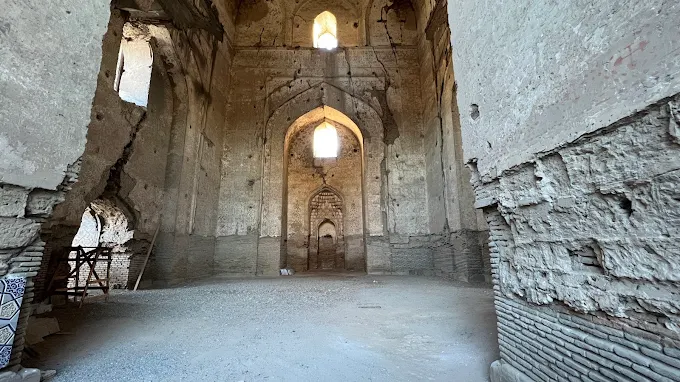
Time has not spared this amazing monument. The building was heavily destroyed. Over the past 30 years, extensive restoration and renovation work has been carried out here, which has made it possible to present the monument in its unique beauty.




Place on the map
Tours where you can visit this place:
Bibi Khanum Mosque
Tashkent — Bukhara — Samarkand — Shakhrisabz
- 720$
- 7d.
Bibi Khanum Mosque
Tashkent — Bukhara — Samarkand
- 640$
- 7d.
Bibi Khanum Mosque
Tashkent — Bukhara — Samarkand — Khiva — Khorezm
- 730$
- 7d.
Bibi Khanum Mosque
Tashkent — Bukhara — Samarkand
- 500$
- 5d.

Bibi Khanum Mosque
Bukhara — Samarkand — Shakhrisabz
- 480$
- 5d.

Bibi Khanum Mosque
Bukhara — Samarkand — Khiva
- 440$
- 5d.

Bibi Khanum Mosque
Tashkent — Bukhara — Samarkand — Khiva
- 590$
- 6d.
Bibi Khanum Mosque
Tashkent — Bukhara — Samarkand — Shakhrisabz
- 1150$
- 7d.