
Samanid Mausoleum
Most of the ancient architectural masterpieces of Bukhara were built in the 9th - 10th centuries. The Samanid Mausoleum, one of the most famous monuments of Bukhara, has been well preserved to this day. The mausoleum, which is the family tomb of the Samanid dynasty rulers, is one of the best examples of architecture from the reign of the Samanid dynasty (875-999).
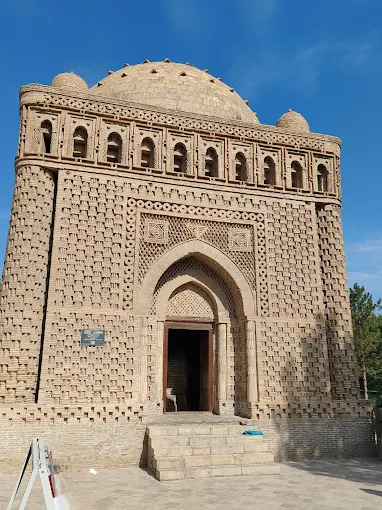
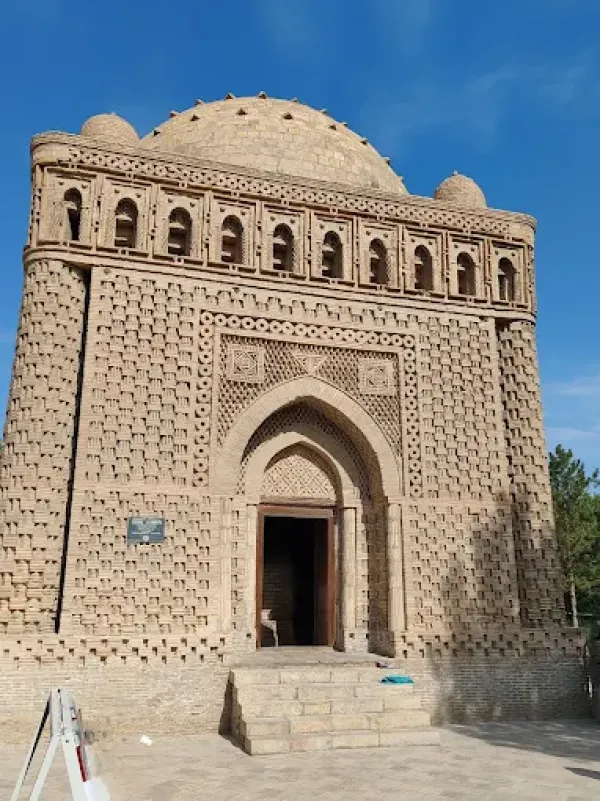
The shape of the Samanid mausoleum is a cube covered by a hemispherical dome. These expressive forms have a direct interpretation in the mythological symbolism, which was given to them by ancient religions, and later by Sufism: the cube is a symbol of stability, a symbol of the Earth; the dome is a semblance of the firmament; their connection is a symbol of the unity of the Universe, and the building, thus, embodies the model of the Universe.
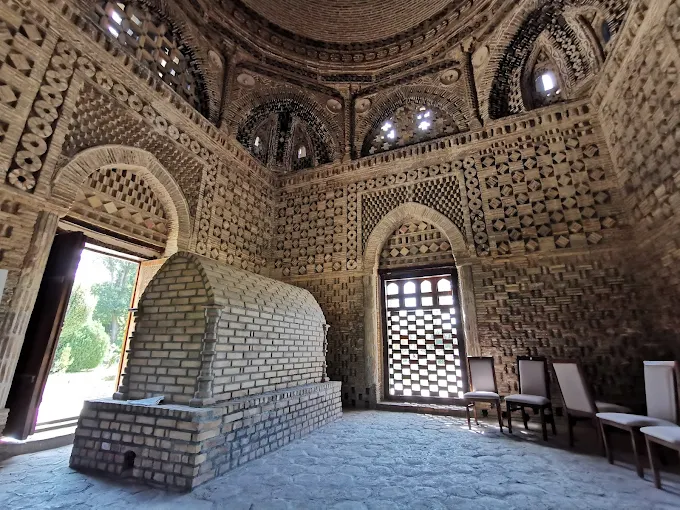
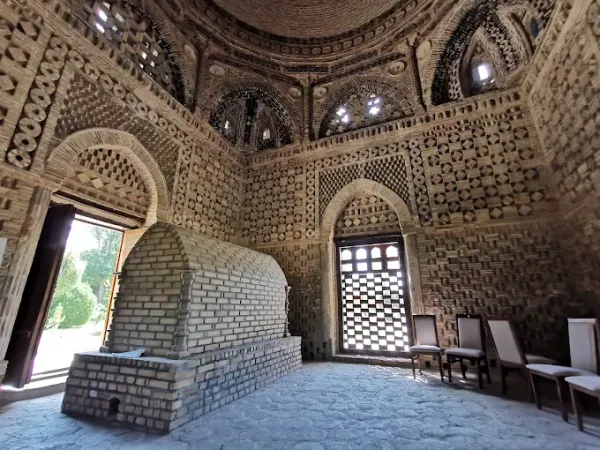
The walls of the mausoleum are lined inside and outside with curly brickwork made of alternating columns of horizontally laid bricks and vertical inserts, creating an openwork ornamental motif of plaiting. Brick rings lined up in a chain encircle the frieze of the mausoleum, resembling the famous rows of "Sassanian pearls" - drilled beads cut from the ganch plaster of the pre-Arab palaces of Central Asia and Iran. The Samanid Mausoleum is deservedly considered a masterpiece of Central Asian architecture - it has achieved a rare architectonics, that is, the unity of structures and architectural and artistic development of the building.




Place on the map
Tours where you can visit this place:
Samanid Mausoleum
Tashkent — Bukhara — Samarkand — Shakhrisabz
- 720$
- 7d.
Samanid Mausoleum
Tashkent — Bukhara — Samarkand
- 640$
- 7d.
Samanid Mausoleum
Tashkent — Bukhara — Samarkand — Khiva — Khorezm
- 730$
- 7d.
Samanid Mausoleum
Tashkent — Bukhara — Samarkand
- 500$
- 5d.

Samanid Mausoleum
Bukhara — Samarkand — Shakhrisabz
- 480$
- 5d.

Samanid Mausoleum
Bukhara — Samarkand — Khiva
- 440$
- 5d.

Samanid Mausoleum
Tashkent — Bukhara — Samarkand — Khiva
- 590$
- 6d.
Samanid Mausoleum
Tashkent — Bukhara — Samarkand — Shakhrisabz
- 1150$
- 7d.