Khudoyar Khan's Palace
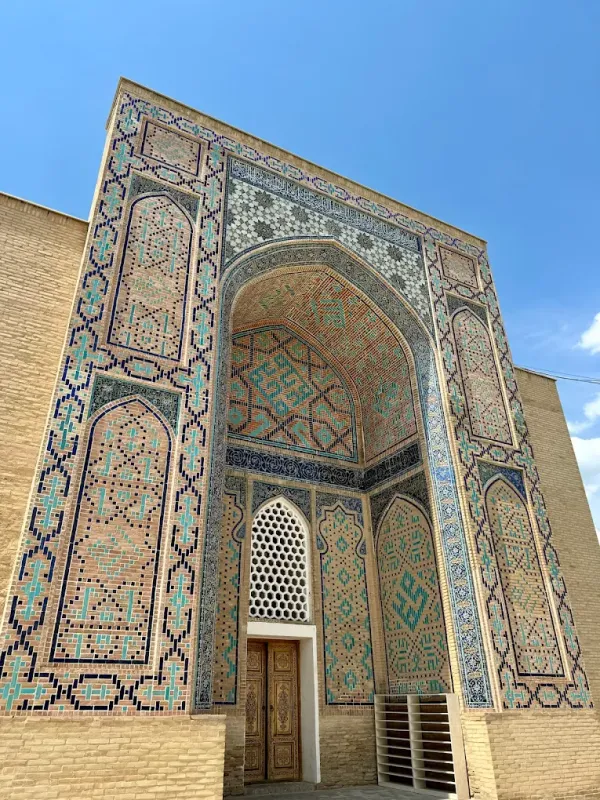
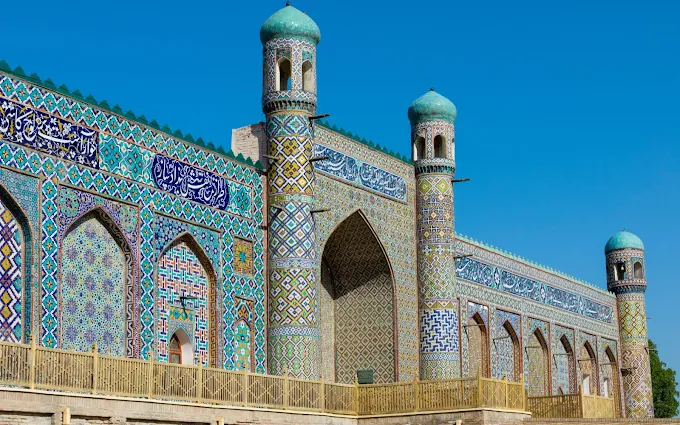
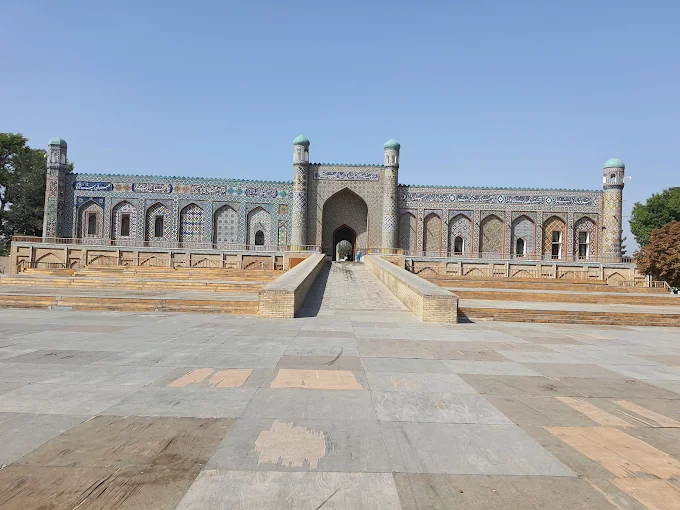
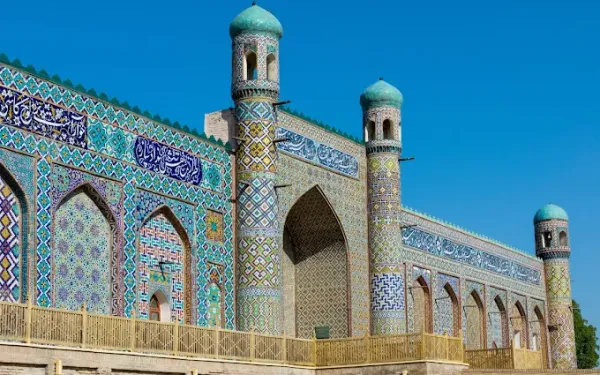
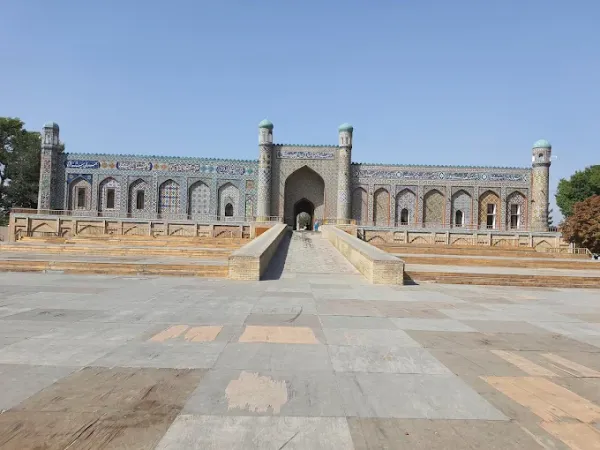
The pearl of Kokand is the palace of the last ruler of the Kokand Khanate, Khudoyar Khan - Urda. The magnificent palace complex, built in 1871, is stunning in its grandeur. The palace building is built in the traditions of Central Asian architecture with a high portal in the middle, decorated with a large entrance arch and four minarets: two of them stand on both sides of the portal, two end the facade from the south and north.
The palace of Khudoyar Khan, surrounded by a carved stone fence, consisted of seven small courtyards and 119 rooms. The total area of the palace is 4 hectares, its foundation is raised by three meters. An Arabic inscription was inscribed above the main gate: "The Great Seyid Muhammad Khudoyar Khan." 16,000 people, 80 craftsmen and 1,000 arbs worked on the construction. The people were driven here by force. They had to work in unbearably difficult conditions, and they were fined and subjected to corporal punishment for the slightest offenses. But the efforts of the poor builders were not in vain. Khudoyar Khan's palace turned out to be magnificent. It still impresses with its richness and splendor of decoration. The building of the facade literally dazzles visitors with colorful colors and a wealth of ornaments: geometric patterns, arabesques, floral motifs – all made of ceramic tiles. The patterns that fill the niches represent compositions that do not repeat themselves. The color scheme of the facade is very bright and colorful, which makes it look like a palace from oriental fairy tales.
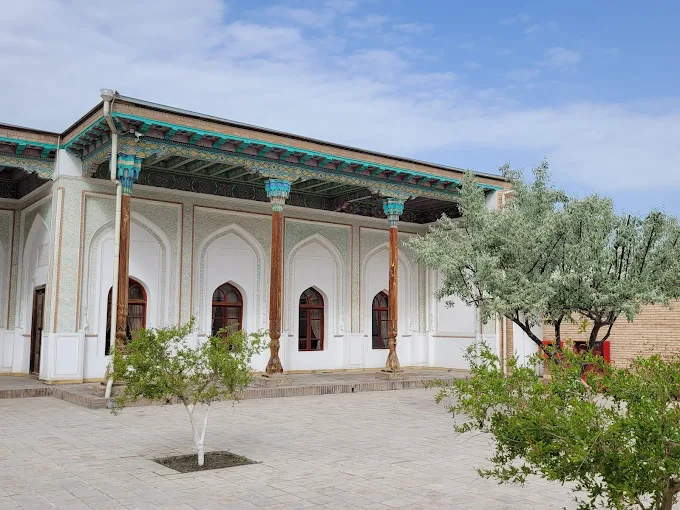
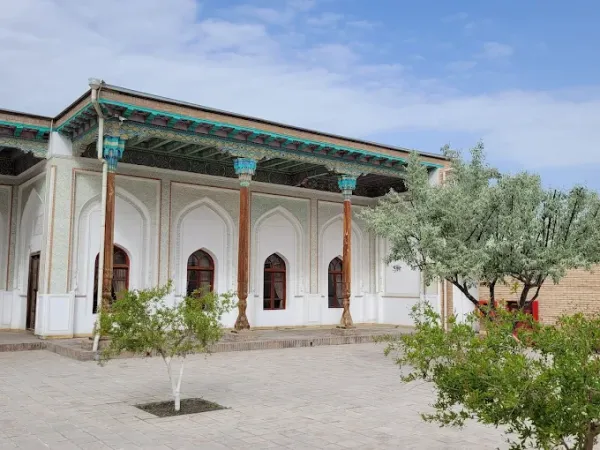
Unfortunately, of the entire grandiose palace ensemble, only two courtyards and 19 rooms remain. The art of ganch carving and painting occupies a large place in the decoration of the ceremonial interiors of the palace. Gancha panels are filled with compositions of stylized trees (cypresses, weeping willow), plants with intertwining branches and stems, leaves and flower rosettes. The art of wood painting is widely used in the ceremonial interiors of the palace. It reaches its greatest richness in the decoration of the throne room ceiling, designed in a noble golden-brown color.
Today, the palace houses a museum of local lore, the exhibits of which tell about the past and present of Kokand.