Khanaka Nadir Divan-Run
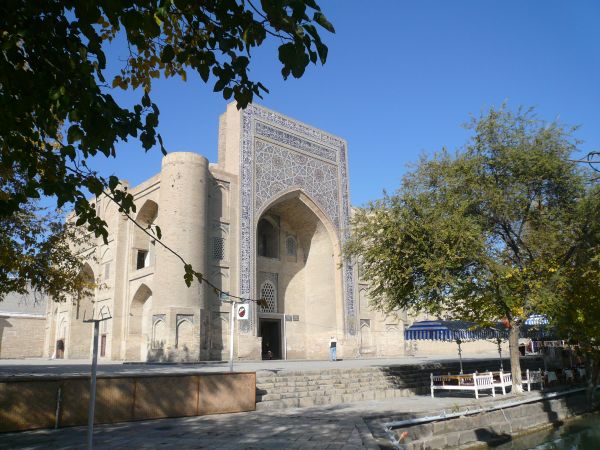
The Divan-begi Khanaka was built by the decree of the court vizier Nadir-divan-begi in 1620 and was part of the famous Lyabi House ensemble. The khanaka is a small building with many chambers and hujras, small rooms in which students lived or dervishes, travelers, pilgrims, and sometimes the rulers themselves and their families stayed overnight. Sick and poor people, dissidents and other needy visitors could find a modest shelter and shelter in the khanak. The doors of the khanaka have always been open to willing parishioners, it has been a place of assistance and support. Some khanaks were supported by donations and gifts, and some had small workshops or shops to support their work. Sometimes a khanaka was built in order to perform a holy boon or to perpetuate one's name in the history of the country, as was done in the case of Nadir divan begi.
"A real little pearl" is what visiting tourists call the khanaka. Indeed, the khanaka Nadir divan begi looks quite small compared to the huge Kukeldash madrasah located nearby. But despite its size, it played a huge role in the life of society, was a kind of charity center and a place of social community, helped people a lot, for which it received the name "pearl".
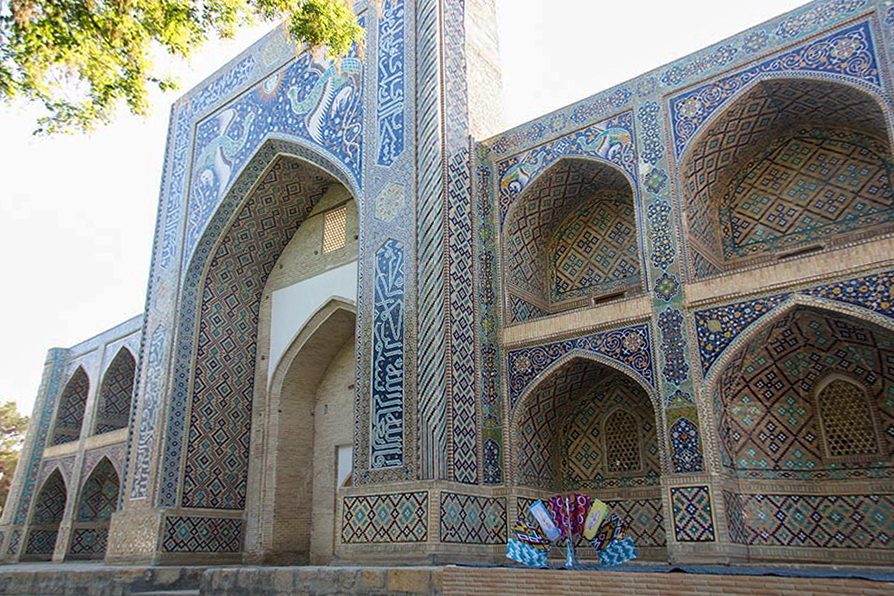
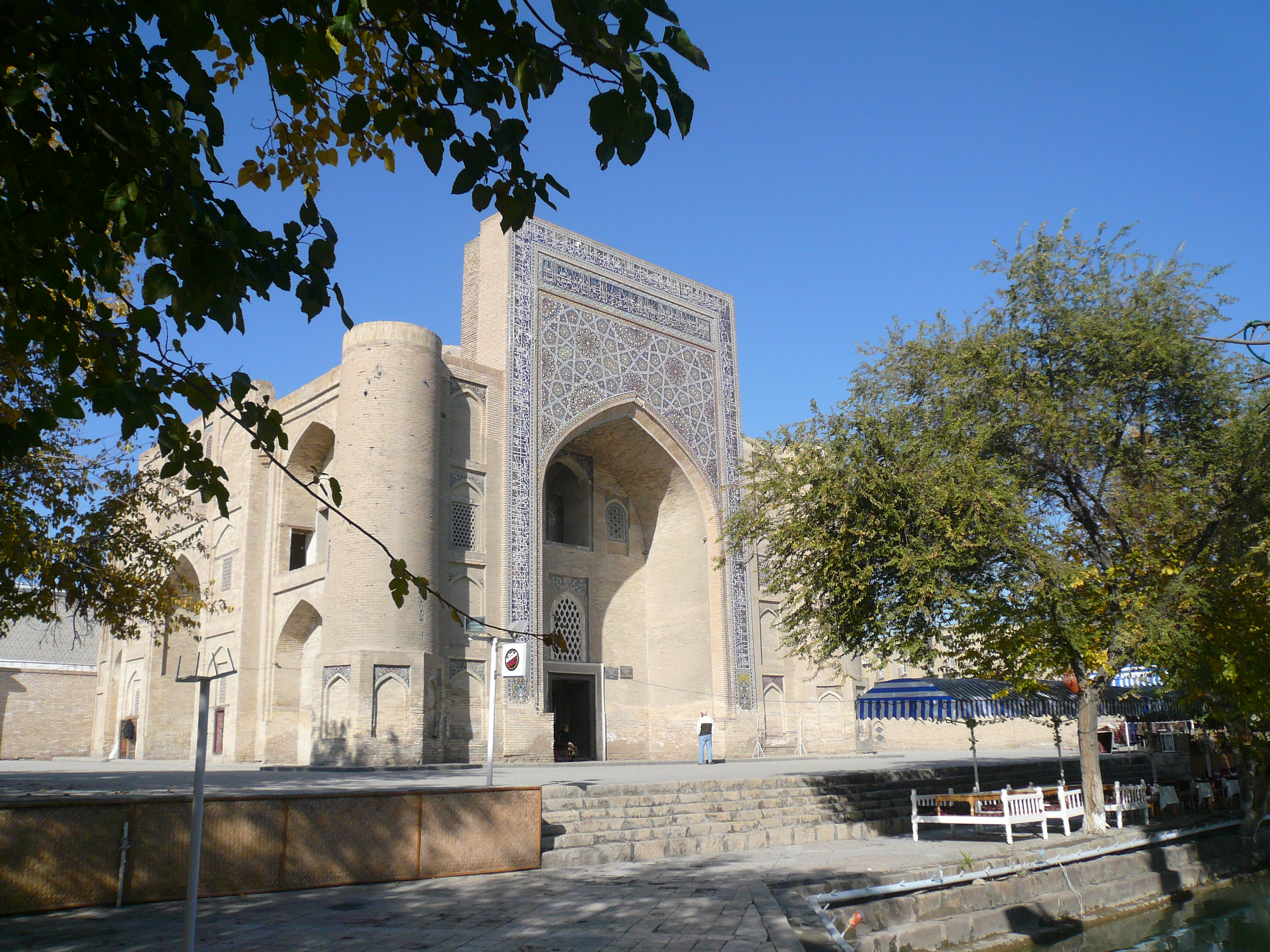
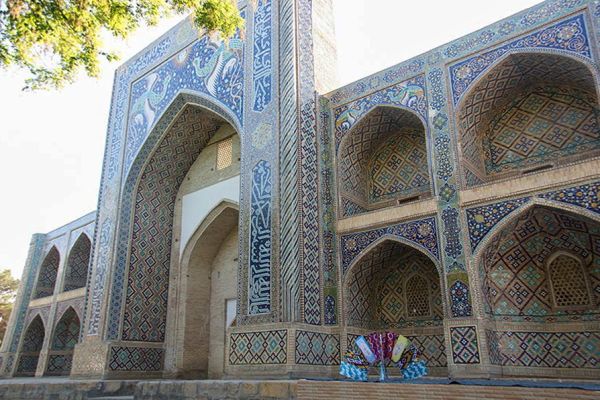
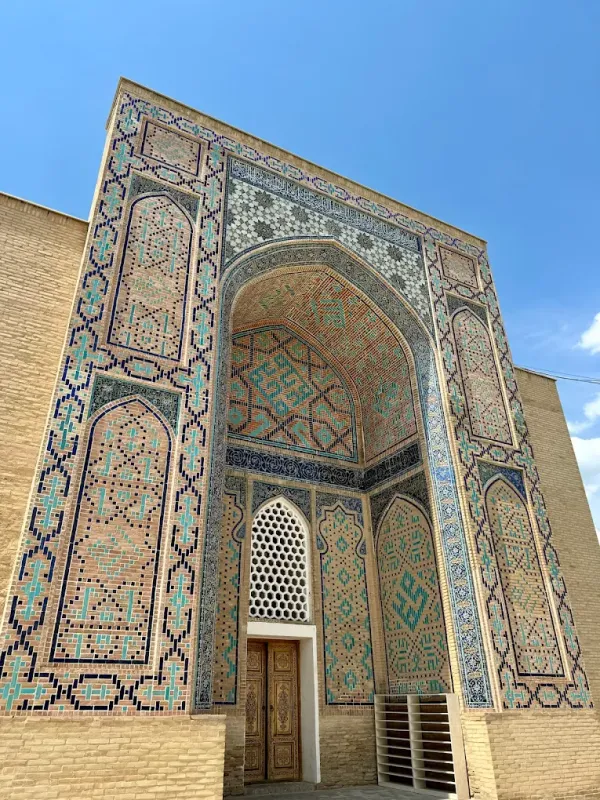
The facade of the shelter is decorated with multicolored blue ornaments, 2 massive wide towers stand on the sides, domed portals are carved into the side walls. The main attraction of the khanaka is the front entrance portal, which is as high as the nearby columns. Like the entire Lyabi House ensemble, the khanaka is a UNESCO World Heritage Site and is a protected historical structure. Tourists are very fond of visiting this holy spiritual place, as they consider it the epitome of high morality, kindness and mercy.




Place on the map
Tours where you can visit this place:
Khanaka Nadir Divan-Run
Tashkent — Bukhara — Samarkand — Shakhrisabz
- 720$
- 7d.
Khanaka Nadir Divan-Run
Tashkent — Bukhara — Samarkand
- 640$
- 7d.
Khanaka Nadir Divan-Run
Tashkent — Bukhara — Samarkand — Khiva — Khorezm
- 730$
- 7d.
Khanaka Nadir Divan-Run
Tashkent — Bukhara — Samarkand
- 500$
- 5d.

Khanaka Nadir Divan-Run
Bukhara — Samarkand — Shakhrisabz
- 480$
- 5d.

Khanaka Nadir Divan-Run
Bukhara — Samarkand — Khiva
- 440$
- 5d.

Khanaka Nadir Divan-Run
Tashkent — Bukhara — Samarkand — Khiva
- 590$
- 6d.

Khanaka Nadir Divan-Run
Tashkent — Bukhara — Samarkand — Shakhrisabz
- 1150$
- 7d.