Culture of Uzbekistan
The culture of Uzbekistan is a centuries—old, sparkling alloy forged on the roads of the Great Silk Road. This is the legacy of great scientists, craftsmen and poets, whose traditions are alive and carefully preserved in every city, mahalla (quarter) and family.
1. Pillars of National Culture: Traditions and Values
Uzbek society is based on deep traditions, where a special place is occupied by:
Hospitality (mehmondӯstӣ): This is the cornerstone of the Uzbek mentality. A guest in the house is considered a messenger of God. Hospitality is manifested in a generous dastarkhan (feast), obligatory tea drinking and special attention to the seating order, where the most honorable places are given to the elders.
Honoring Elders and Mahalla: Respect for the older generation is an absolute law. Social life is centered around the mahalla, a traditional neighborhood that serves as the guardian of collective traditions, morality and mutual assistance.
Navruz Holiday: An ancient celebration of the vernal equinox, symbolizing renewal and rebirth. His central ritual is the preparation of the sacred dish sumalak (sweet pasta made from sprouted wheat), which becomes a symbol of unity and hope.
2. Art, Crafts and Aesthetics of Life
Uzbekistan is famous for its rich intangible heritage, which is included in the UNESCO lists.:
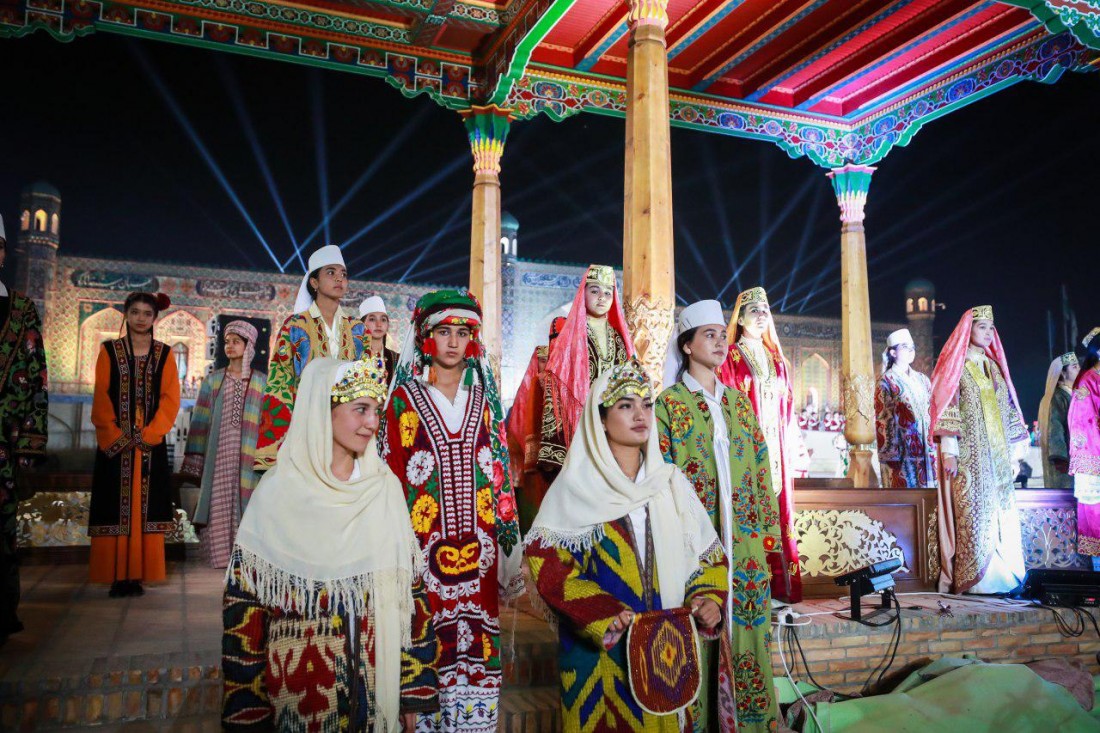
The art of Weaving: Uzbekistan is the birthplace of legendary fabrics such as ikat (atlas and adras), characterized by a unique, sophisticated manual yarn dyeing technique. These fabrics are a symbol of status and taste.
Ceramics and Painting: Each school of ceramics (Rishtan, Gijduvan) has its own unique patterns and color palette. The art of miniature, which flourished in Herat and Samarkand, continues to live in the form of elegant book illustrations and wall paintings.
National Costume: An integral part of culture. Men's chapan (quilted robe) and women's dresses combined with a traditional headdress — a skullcap (doppy) — reflect regional characteristics and status.
Music and Dance: The classical art of Shashmakom and regional dance schools (Bukhara, Khorezm, Ferghana), each of which has its own unique temperament and plasticity.
3. Gastronomy: Pilaf as a Cultural Code
Uzbek cuisine is not just food, but a ritual reflecting history and customs.
Pilaf (Oshi palov): The main dish included in the UNESCO Intangible Heritage List. It is not only a culinary masterpiece, but also a ceremonial element symbolizing community and wealth.
Sacred Bread (Non): A flatbread that has a sacred meaning. It should not be placed face down, and the departing person should take a bite, which will be waiting for his return.
The culture of Uzbekistan, being deeply traditional, is open to the world and remains a source of inspiration, combining ancient wisdom and the desire for development.